 |
October 2026 |
|
Alaska obtains RCRA authorization
EPA has provided final authorization to the State of Alaska to administer its own RCRA hazardous waste management program. With only a few exceptions, Alaska’s program is nearly identical to the federal regulations. Unique provisions include extra reporting for hazardous waste generators, more-stringent corrective action cleanup requirements, and the addition of electronic wastes as universal wastes. READ MORE
|
|
.V CAA ships to your door!
McCoy’s final CAA .VIRTUAL seminar of the year, November 3-5, 2026, is coming soon and shipping is on us! Course materials for the Clean Air Act training include a binder with a comprehensive set of course notes plus McCoy’s CAA Unraveled Toolbox publication. Register by Tuesday, October 27, 2026, to get complimentary shipping with your registration.
CAA Unraveled Agenda
|
|
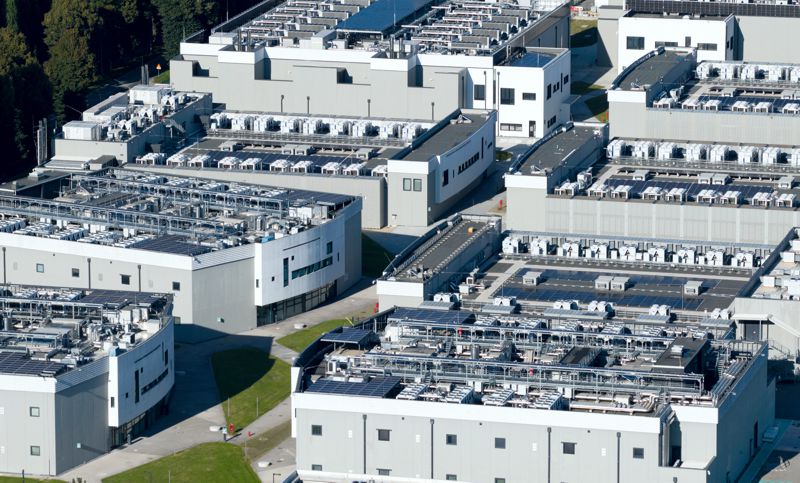
Data centers over public health
EPA’s dual rules to rescind Clean Air Act greenhouse gas (GHG) emission standards mark another step back from its mission to protect human health and the environment. Instead, the agency chooses to support AI data centers and coal-fired power plants, disingenuously defending its deregulatory efforts. These GHG rules are not minor, routine regulatory tweaks—they are the next phase of a undermining the nation’s climate policy. Whether or not these rules can withstand court challenges is questionable. READ MORE
|
|
Network with seasoned RCRA professionals
We know learning virtually isn’t for everyone; but don’t worry, we’ve got you covered! Join RCRA professionals for our only in-person Refresher seminar of the year on November 17-18, 2026, in Houston, TX. Because of the fast-paced 2-day itinerary, this course typically attracts industry experts, so you’ll get to network with people who know their way around the haz waste regs. Book your room at the South Shore Harbour Resort by November 2, 2026, to secure a reduced room rate of just $145 per night!
|
|
 |
 |
|
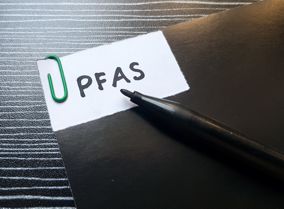
New developments on PFAS D&D
EPA recently updated its interim guidance on per- and polyfluoroalkyl substances (PFAS) and PFAS-containing material destruction and disposal technologies. Building on the 2024 guidance, the update continues to emphasize incineration, landfilling, and deep-well injection, while also acknowledging the development of alternative technologies such as gasification. The guidance does not establish regulatory requirements; instead, it provides recommendations to stakeholders on the best current disposal technologies for these forever chemicals. READ MORE
|
|
McCoy’s .Virtual RCRA
Our .Virtual seminars let you learn RCRA from anywhere with an internet connection. We will ship our 2026 RCRA Reference and Unraveled publications, along with a binder of course notes that’s updated before each seminar. Register early for our next .Virtual 5-day Seminar on December 7-11, 2026, to ensure timely delivery. Please note that the agenda shows Mountain Standard Time (MST), as we broadcast from our studio in Lakewood, Colorado. Looking forward to seeing you .Virtually!
|
|
 |
 |
|
Exceptional events create exceptional emissions
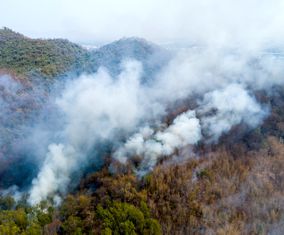
EPA’s exceptional events rule allows state and local agencies to exclude air quality monitoring data from regulatory decisions. A significant and ongoing area where this rule is used is when particulate matter data is excluded from NAAQS compliance determinations, especially when excess particulate matter is driven by wildfires. However, another closely related source of such emissions is prescribed burns, and claiming that a prescribed burn is an exceptional event is a regulatory challenge. A policy analysis from the journal Environmental Science and Technology attempts to address this challenge. READ MORE
|
|
2027? It’s almost here!
The 2027 McCoy seminar schedule is now live and open for registration! Kicking off the new year, we host our .Virtual CAA seminar from January 12-14, 2027, followed by two RCRA courses in February—our .Virtual 5-day seminar from February 1-5, 2027, as well as our .Virtual RCRA Refresher seminar from February 23-24, 2027. And don’t forget to check back in, as more seminars, locations, and dates will be added to the schedule soon!
|
|
 |
 |
|
RCRA fundamentals: wastes, not products
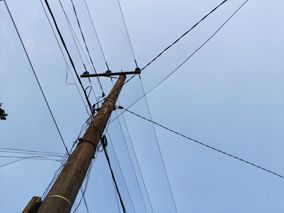
It is well understood that RCRA applies to solid wastes, not products used for their intended purpose. But what about telecommunication cables that are no longer in use, yet remain affixed to standing poles and other telecom infrastructure? Applying its earlier interpretation that an intact, standing building is not discarded until it is actually destroyed [RO 11841], EPA’s new guidance clarifies that telecom “cables that have not fallen from their place of installation and remain affixed to the unabandoned” infrastructure are not discarded and are not subject to RCRA. [RO 14977; see also RO 11543] Even if the cables were lead-clad and exhibited the toxicity characteristic, they are not hazardous waste unless they are first solid waste, and they are not solid waste unless they are first discarded.
|
 |
|
New cats in town. Meet Leopardus tilcayo
For the first time in over a century, scientists have discovered a new wild cat species, Leopardus tilcayo. Native to the Yungas cloud forests of Bolivia, this new felid (cat family) species is much smaller than the average house cat, weighing about 3 pounds and measuring 18 inches long. The new cats exhibit distinctive wild behavior. However, it was the large rosettes covering the animal that made biologist, and National Geographic Explorer, Paola Nogales-Ascarrunz realize she was studying a taxonomic breakthrough. Meet the First New [Cool] Cat Species Discovered in 100 Years
|
|
Shaping the future of RCRA testing
EPA is asking environmental professionals, researchers, regulators, and other industry stakeholders to weigh in on its sampling and testing guidance and methods. While many have first-hand experience with the Method 1311 toxicity characteristic leaching procedure (TCLP), users also know of its shortcomings. The agency is requesting information on the future of TCLP testing, possible alternatives, and challenges faced when performing RCRA-prescribed test methods. Now there is an opportunity to share real-world experiences that could inform future updates to waste sampling and testing methods. READ MORE
|
|
 |
 |
|
Happy Halloween!
Cool, crisp weather and colorful leaves mean Halloween is upon us! As you enjoy the haunted festivities, it’s easy to overlook the environmental impact of single-use costumes, plastic decoration waste, and trashed jack-o’-lanterns. In fact, the waste from these three items can be the scariest part about Halloween! Enjoy the holiday this year by cutting waste and getting creative with DIY costumes, choosing reusable decor, and composting your pumpkin scraps.
The national recycler, Ridwell, (though not available in all cities) has a vendor that uses multi-layer plastics (i.e., candy wrappers) as feedstock. And for fun, check out the Boo Ghost of Disapproval T-Shirt!
|
|
2026–2027 Seminars
3-Day CAA Seminars
.VIRTUAL: November 3–5, 2026
.VIRTUAL: January 12–14, 2027
.VIRTUAL: April 6–8, 2027
4-Day California Title 22-RCRA Seminars
.VIRTUAL: May 10–13, 2027
5-Day RCRA Seminars
.VIRTUAL: December 7–11, 2026
.VIRTUAL: February 1–5, 2027
.VIRTUAL: April 19–23, 2027
Denver: June 7–11, 2027
.VIRTUAL: July 19–23, 2027
2-Day RCRA Refreshers
Houston: November 17–18, 2026
.VIRTUAL: February 23–24, 2027
.VIRTUAL: June 22–23, 2027
Visit mccoyseminars.com to register or call us at 303-526-2674.
|
|
If you have received this email in error or wish to remove your name from our subscriber list, you may unsubscribe here. You may also update your profile here. If you need to contact us directly about subscription or other issues, you may email us at mccoyreview@mccoyseminars.com or call us at 303-526-2674.
Copyright ©2026 McCoy and Associates, Inc.
12596 West Bayaud Avenue, Suite 210
Lakewood, CO 80228
McCoy and Associates, Inc. makes no representation, warranty, or guarantee in connection with any guidance provided in RCRA Review. McCoy and Associates, Inc. expressly disclaims any liability or responsibility for loss or damage resulting from its use or for the violation of any federal, state, or municipal law or regulation with which such guidance may conflict. Any guidance in RCRA Review is general in nature related to the federal RCRA regulations. Persons evaluating specific circumstances dealing with RCRA regulations should review state and local laws and regulations, which may be more stringent than federal requirements. In addition, the assistance of a qualified professional should be enlisted to address any site-specific circumstances.
|
|