 |
September 2026 |
|
Last Call for Cali T22!
Attend our final .VIRTUAL California Title 22-RCRA Seminar of the year, September 28–October 1, 2026. Get your questions answered as our presenters demystify the California and federal hazardous waste regs. Since it’s an online seminar, be sure to attend with a working microphone so you can speak with the presenters and share your questions in real time. Like all McCoy .V seminars, we ship your course materials early, so you have them well before the action starts. Register today!
.Virtual 4-Day California Title-22 RCRA Seminar Agenda
|
|
Nonattainment NSR: permits before offsets
EPA has recently reversed a longstanding permitting process for nonattainment new source review (NNSR). For more than 30 years, the agency held that NNSR permits should be issued only after the necessary emission reduction credits had been obtained. No more. New guidance explains how EPA will allow permits to be issued even before emission offsets are granted, provided the offsets will be secured before construction commences. READ MORE
|
|
 |
 |
|
Make a home for Mason bees
All bees are integral to your garden and food production operations but it’s the lesser-known solitary Mason bee that is equally hard-working as the honeybee. Honeybee and bumblebee species are considered pollen gatherers, while solitary bees like the Mason bees are considered pollen spreaders. Most of the pollen gathered on the body of the solitary Mason bee quickly falls off—and onto each of the flowers that the bee visits. Catch this PBS video to learn how to bring Mason bees home.
|
|
EPA axes cleanup changes
EPA has long interpreted RCRA corrective action, also referred to as the hazardous waste cleanup program, to apply not only to hazardous waste as defined in the regulations, but also to the more broadly defined hazardous waste defined under the RCRA statute. However, the agency recently withdrew its proposal to modify the definition of hazardous waste as it applies to corrective action. The proposal was meant to clarify EPA’s position without making substantial changes or creating confusion in existing cleanup and remediation efforts. READ MORE
|
|
 |
 |
 |
|
Affirmative defense reinstated for Title V
Affirmative defense allows sources to avoid liability during certain CAA enforcement cases brought for noncompliance with technology-based emission limitations. In 2023, EPA removed the emergency affirmative defense provisions from CAA Title V operating permit regulations (see our previous article). Effective June 1, 2026, the affirmative defense provisions have been reinstated in 40 CFR §§70.6(g) and 71.6(g). [91 FR 32357] This action is in response to SSM Litigation Group vs. EPA (Docket No. 23-1267; September 5, 2025), where the U.S. Court of Appeals for the D.C. Circuit found the 2023 rescission to be “unreasonable and not in accordance with law.”
|
 |
|
HFC phasedown delay weakens climate protections
Hydrofluorocarbons (HFCs) were developed to replace chlorofluorocarbons (CFCs) because of CFCs’ ozone-depleting potential; however, HFCs still have very high global warming potential. Due to industry concerns over EPA’s 2023 technology transitions rule [88 FR 88825], which is part of the agency’s phasedown of HFCs, the compliance deadlines for the HFC transition have been extended or eliminated completely. Affected entities can be found in almost every sector of the American economy, including nearly every facility that operates a refrigeration unit. These deregulatory efforts took effect on July 27, 2026 [91 FR 31284] and may result in lost savings to consumers and businesses of up to $4.5 billion, while climate change mitigation damages may be as much as $50 billion.
|
|
 |
|
Weighty wood NESHAP controls
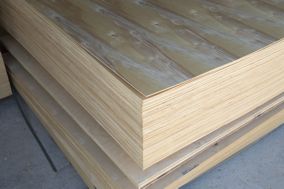
Plywood and composite wood products (PCWP) are manufactured by bonding wood material or agricultural fiber, generally with resin under heat and pressure, to form a structural panel or engineered wood product. The manufacture of these products can produce hazardous air pollutants (HAPs) such as formaldehyde, phenol, and diisocyanates. After a nearly 20-year wait, EPA has amended the PCWP NESHAP to address longstanding issues and regulate HAPs previously subject to “no control.” READ MORE
|
|
 |
 |
|
Amazon deforestation on decline
With assistance from new technologies, the Amazon has seen its lowest level of deforestation alerts since 2013. The “DETER” satellite imagery software pinpoints new forest clearings in near real-time, enabling enforcement agencies to swiftly intervene. Data from Brazil’s National Institute for Space Research (INPE) confirmed just 1,110 square miles of deforestation from August 2025 through July 2026, which is 55% below the average of the preceding decade. Still, there is more to do to conserve the magnificent Amazon rainforest.
|
 |
|
Permit possibilities for coal ash management
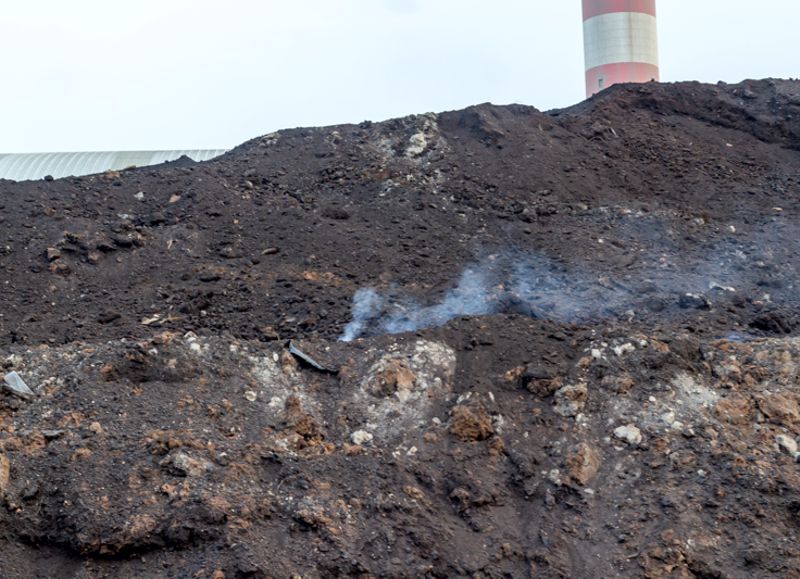
EPA recently announced an advance notice of proposed rulemaking (ANPRM) for the management of coal combustion residuals (CCR) from electric utilities and is requesting comment on whether a general permit could be developed to allow coal-fired power plants to temporarily obtain a general permit until an individualized permit is issued by EPA or a state. [91 FR 43051] The agency wants to know:
1. What conditions are relevant for defining which CCR management units would be eligible for a general permit?
2. Should general permits be time-limited or temporary?
3. What should be the scope or details of the terms of a general permit?
4. What are the possible economic impacts of requiring general permits for different types of CCR management units?
Comments on the ANPRM may be submitted through October 13, 2026 via Docket ID No. EPA-HQ-OLEM-2026-4159.
|
 |
|
Rubber tire NESHAP revocation
EPA finalized the revocation of its 2024 rubber tire manufacturing NESHAP rule on June 22, 2026. [91 FR 37274] The revocation comes in response to a 2025 Joint Resolution of Disapproval [H.J. Resolution 61], authorized under the Congressional Review Act (CRA, see our previous article on the CRA). While the 2024 amendments to Part 63, Subpart XXXX have not had any legal effect since May 6, 2025, EPA’s action formally removes the obsolete provisions from the Code of Federal Regulations. Had the 2024 rule remained in effect, new emission limits and monitoring requirements would have been in place for total hydrocarbons and filterable particulate matter, surrogates for previously unregulated hazardous air pollutants required to be regulated under Louisiana Environmental Action Network v. EPA (U.S. Court of Appeals, D.C. Circuit; Docket No. 17-1257; April 21, 2020).
|
|
2026–2027 Seminars
3-Day CAA Seminars
.VIRTUAL: November 3–5, 2026
.VIRTUAL: January 19–21, 2027
.VIRTUAL: April 6–8, 2027
4-Day California Title 22-RCRA Seminars
.VIRTUAL: September 28–October 1, 2026
.VIRTUAL: May 10–13, 2027
5-Day RCRA Seminars
Las Vegas: October 19–23, 2026
.VIRTUAL: December 7–11, 2026
.VIRTUAL: February 1–5, 2027
.VIRTUAL: April 19–23, 2027
Denver: June 7–11, 2027
.VIRTUAL: July 19–23, 2027
2-Day RCRA Refreshers
Houston: November 17–18, 2026
.VIRTUAL: February 23–24, 2027
.VIRTUAL: June 22–23, 2027
Visit mccoyseminars.com to register or call us at 303-526-2674.
|
|
If you have received this email in error or wish to remove your name from our subscriber list, you may unsubscribe here. You may also update your profile here. If you need to contact us directly about subscription or other issues, you may email us at mccoyreview@mccoyseminars.com or call us at 303-526-2674.
Copyright ©2026 McCoy and Associates, Inc.
12596 West Bayaud Avenue, Suite 210
Lakewood, CO 80228
McCoy and Associates, Inc. makes no representation, warranty, or guarantee in connection with any guidance provided in RCRA Review. McCoy and Associates, Inc. expressly disclaims any liability or responsibility for loss or damage resulting from its use or for the violation of any federal, state, or municipal law or regulation with which such guidance may conflict. Any guidance in RCRA Review is general in nature related to the federal RCRA regulations. Persons evaluating specific circumstances dealing with RCRA regulations should review state and local laws and regulations, which may be more stringent than federal requirements. In addition, the assistance of a qualified professional should be enlisted to address any site-specific circumstances.
|
|